CJP Election Protests: Delhi Police closes 57 Metro Stations from 9 October evening to 10 October
The Joint Commissioner of Delhi Police has declared closure of 57 Metro stations in a letter sent to the Delhi Metro Rail Corporation.


Bringing you the Best Analytical Legal News


The Joint Commissioner of Delhi Police has declared closure of 57 Metro stations in a letter sent to the Delhi Metro Rail Corporation.
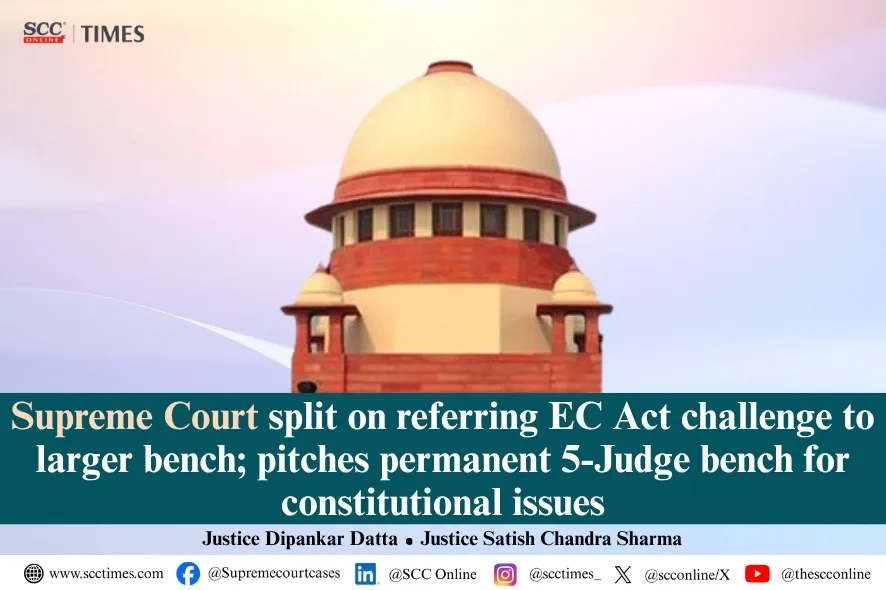
Pitching for a permanent 5-judge bench, the Court reasoned that resolving constitutional issues is the primary task of Judges of the Supreme Court, that must remain its core priority. Pendency of references for far too long does not reflect well on the institution.
Supreme Court observed that while the accused being a teacher, needed to be more sensitive when dealing with young students, particularly girl students, his inappropriate conduct or use of corporal punishment, in the absence of the requisite sexual intent, could not by itself justify prosecution under the stringent provisions of the POCSO Act.
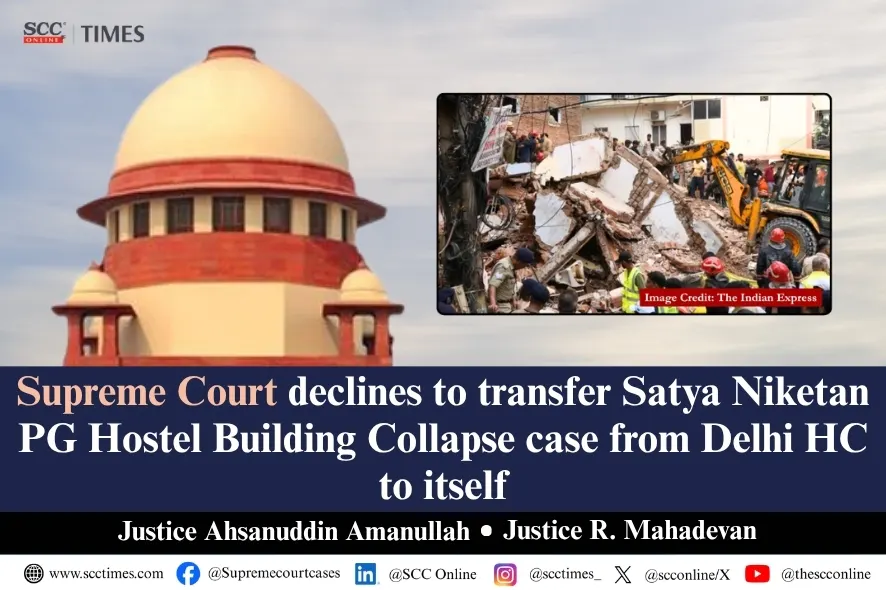
The Court specifically requested the Delhi High Court to “monitor the case at short intervals”.
Two Supreme Court rulings on the scope of CCI’s powers and validity of Special Intensive Revision (SIR) of electoral rolls.

The competition is open to researchers from all disciplines with an interest in international trade law.

The Centre has notified the Animal Feeds and Feed Ingredients (Quality Control) Order, 2026, mandating BIS certification for specified animal feed products.

The partnership combines Forvia’s expertise in seating systems and technology with Anand Group’s established network, customer relationships, and deep knowledge of the Indian automotive ecosystem.

At AIAC Asia ADR Week 2026, Mr. Andrea Carlevaris explored six principles for the future of dispute resolution: lightness, quickness, exactitude, visibility, multiplicity and consistency, emphasising efficient proceedings, precise legal reasoning, institutional transparency and consistent decision-making without compromising fairness.

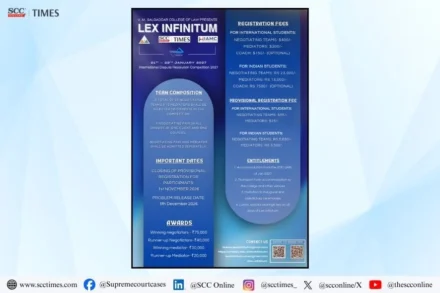
The 11th edition was host to several universities and colleges from across the globe where we welcomed over 35 distinguished ADR professionals, while witnessing the intense battle of skills among 24 negotiating teams and 12 talented mediators. It was a celebration of knowledge, strategy, and collaboration that truly elevated the spirit of ADR.

Khaitan & Co advised Brookfield Asset Management on its acquisition of a portfolio of eight warehousing assets across multiple cities from ESR Group. The firm’s role included transaction structuring, due diligence, preparation of transaction documents and procurement of a warranty and indemnity insurance policy.